Thank you for visiting! This non-profit multi-author website discusses geopolitics from an American perspective. To learn more about us see the information below and the other “about” pages on the top menu bar.
“My friend Bill Quick {of the Daily Pundit} has little regard for you other than your ability to apologize.”
— The nicest thing ever said about my work at the FM website, made in a comment by “Major Scarlet.”
“I now wish to make the personal acknowledgment that you were right, and I was wrong.”
— Letter by Abraham Lincoln to Grant, 13 July 1863.
Contents
Click on the title to jump to that section.
- The focus of the FM blog
- Politics of the FM site
- Navigation tips
- Important notes about this blog
- Who was Fabius Maximus?
- A thank you for the creator of this site
I. Our focus
We live in exciting times, when many things that have long remain fixed become unstuck. America is changing. The post-WWII geopolitical and financial regimes are ending. The era of cheap energy is ending. And none can foretell what comes next.
This website discusses geopolitics — broadly defined as economics, government, sociology and the military arts — from an American’s perspective. This includes topics such as grand strategy, demographics, and peak oil. Here we seek a perspective from which to better see events and trends — things on the edge of our available information, on the edge of known theory. Our goal: to find ways to reignite the spirit of a nation grown cold. First person data is welcomed, but not considered definitive. Both the on-the-spot observer and the analyst each have their role, and only by working together can we effectively seek the truth.
Are these things discussed here good or bad? Please consult a priest or philosopher for answers to such questions. This author only discusses what was, what is, and what might be.
“The world is changed, I can feel it in the water, I can feel it in the earth, I can smell it in the air.”
— Said by Treebeard, leader of the Ents, from The Two Towers— part II of Tolkien’s The Lord of the Rings saga.
II. Politics of the FM site
Click here for a description of the politics of the FM website’s team. It’s probably not what you think.
III. Navigation tips
The site is thoroughly cross-linked, for easy navigation. The menu bar on the right provides five ways to help you find material of interest.
- The FM Reference Library – These pages provide links to both my posts and valuable resources elsewhere on the Internet.
- The Search box.
- Archives– a drop-down menu showing articles by month.
- See posts about these subjects — Archives by category; shows the number of posts in each.
- Tag Cloud — click on the word to see all posts mentioning that tag; size shows relative frequency of those posts.
The pages in the reference library contain archives about declassified National Intelligence Estimates, reports about the Armry’s greatest threat, articles by top writers about modern warfare, about our various wars, about peak oil, about the end of the post-WWII geopolitical regime, and more.
IV. Important notes about the this blog
- Read the posts of this blog as Dickens was read in the 19th century, a book delivered to you by installments.
- Most of these posts discusses things on the edge of our knowledge and theory. For clarity, forecasts are stated in somewhat black and white terms. You can mentally insert the necessary qualifiers, the most important of which is “future is the unknown — all we can do is guess.”
- This is written for a general audience, hence you will see few abbreviations, jargon, and technical terminology. Definitions of military terms follow the Dept of Defense Dictionary, JP 1-02, to the extent practical (click here to see the PDF of JP 1-02).
- Unless you specify otherwise, emails may be posted to the appropriate comments section — anonymously, unless you explicitly give permission to cite you.
- Because of the emerging nature of copyright law on the Internet, we try to comply with the fair use provisions of Title 17, Section 107, U. S. Code. All extracts from copyrighted works are either quoted by permission or are intended solely for the purpose of commentary. Where possible, we have linked to the original source, or to the web site of the copyright holder.
V. Who was Fabius Maximus?
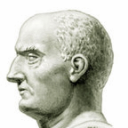
Fabius Maximus (280 – 203 BC) saved Rome from Hannibal by recognizing Rome’s weakness and therefore the need to conserve its strength. He turned from the easy path of macho “boldness” to the long, difficult task of rebuilding Rome’s power and greatness. His life holds profound lessons for 21st Century Americans.
VI. A thank you for the creator of this site
This blog was created by Gina of the Defense and National Interest editorial staff, whose skill and long effort are responsible for its design and smooth operation.
.
